
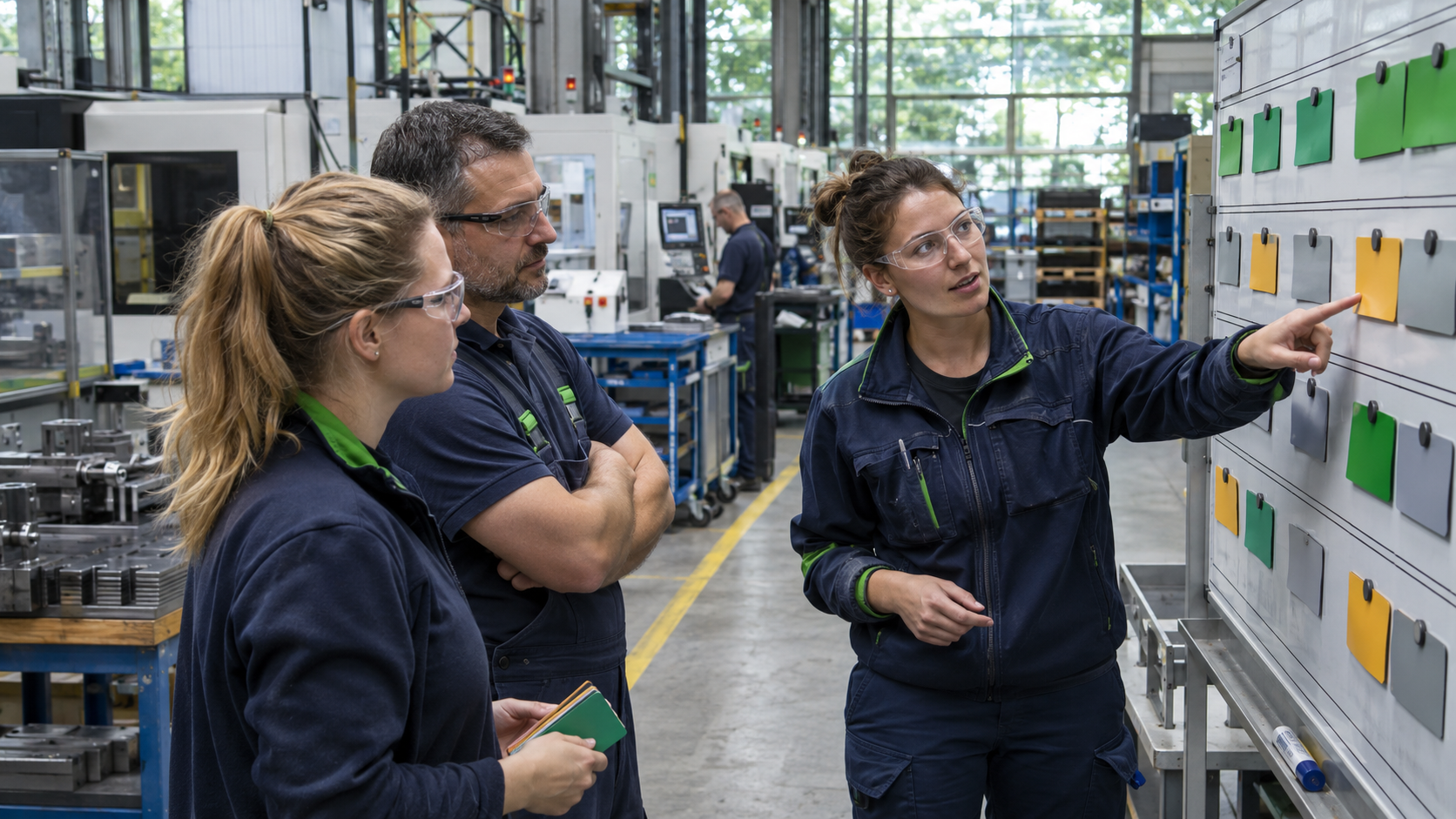
Visual management
Making processes visible makes them easier to manage.
Many problems in production and business operations come from a lack of clear, timely information. When process status is not visible, decisions rely on assumptions and problems are spotted too late.
Visual management puts key information where people need it, when they need it. It simplifies processes, clarifies communication and enables faster, more effective responses.
The aim is to make process status easy to understand, so everyone can recognise what is happening and take appropriate action.
Where do problems arise?
- information arrives too late
- process status is unclear
- problems are identified too late
- communication between shifts and departments is unclear
- decisions rely on intuition rather than data
What we introduce through visual management
- visual boards showing key information, including KPIs and planned versus actual output
- clear identification of workstations and material flows
- clearly defined process statuses: OK / problem / waiting
- standard visual formats that are easy to understand
- daily and weekly operational meetings supported by visual information
- tracking of deviations and prompt responses to problems
What this looks like in practice
When information is delayed and process status needs repeated explanation, work becomes slower and less reliable.
Visual management makes the situation clear at a glance: what was planned, what has been completed and where deviations have occurred.
This reduces the need for repeated clarification, speeds up decisions and supports a timely response to problems.
Results of visual management
- better process visibility
- faster identification of problems
- more effective communication between teams
- less downtime and fewer misunderstandings
- clearer decisions
- greater employee ownership and involvement
